

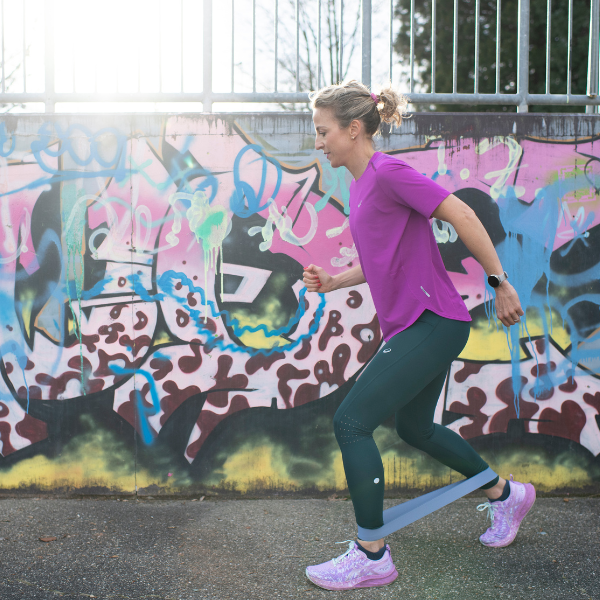
He carries, stabilizes, cushions, and yet many women only pay attention to him when
Disorders such as incontinence occur: the pelvic floor. It is also a central powerhouse for female runners. Whether you're just starting to run start, come back after a pregnancy or already regularly run 10 km or
running a half marathon: a functional pelvic floor is crucial for being light on your feet, stable and
to be on the road with joy.
In this article, you will find out why the pelvic floor plays a key role in running,
how different phases of life affect it, which training myths you can trust and which
and how you can integrate it into your running training.
Why the pelvic floor is so important when running
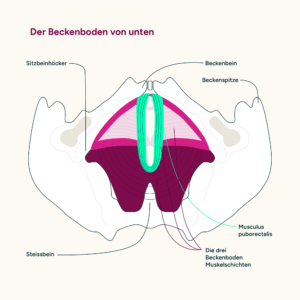 Anatomically speaking, the pelvic floor forms the muscular end of the bony pelvic floor.
pelvis and closes the lower body orifices. Via fine connective tissue structures
(Fascia) it is connected to surrounding muscles and tissue. This creates a
functional unit that is activated with every movement, every shift in weight and every breath.
cooperates.
Running is a high impact sport and due to the ground reaction force there is a load
for the musculoskeletal system and especially for the core (Bérubé & McLean, 2024).
To absorb these forces, the pelvic floor must be elastic, strong and responsive.
If the pelvic floor is too weak, tense or restricted in its function, this can lead to
complaints - for example:
- Stress incontinence
- Feeling of pressure or heaviness in the pelvis or vagina
- Tension in the lower back
But even without acute symptoms, targeted pelvic floor training is worthwhile: a functional
pelvic floor protects against overloading and ensures a stable, powerful and light pelvic floor.
Running feel.
How do the demands on the pelvic floor change over the course of a lifetime?
Running accompanies many women through different life stages and the demands
on the pelvic floor are constantly changing. This makes it all the more important to provide it with targeted support.
Young women and athletes often do not focus on the pelvic floor, even though
Sports such as running or volleyball put a lot of strain on it. Studies show that even
Women without pregnancy and childbirth (nulliparous athletes) with stress incontinence
can be affected (Joseph et al. 2021). Preventive training and good education are therefore
essential - not just when complaints arise.
During pregnancy, the pelvic floor supports the increasing weight of
Uterus, baby and placenta. At the same time, the connective tissue undergoes hormonal changes
bedingt. This can affect pelvic stability. Symptoms such as incontinence
are not uncommon. Those who are already affected during pregnancy have an increased
Risk of pelvic floor complaints later on (Siahkal 2020) - targeted, adapted training
is therefore doubly worthwhile.
After the birth, the pelvic floor needs time to regenerate - regardless of whether
vaginal birth or abdominal birth (caesarean section). Complaints such as incontinence, feeling of pressure
or symphysis pain can persist beyond the recovery period. According to the
current consensus statement by Christopher et al. (2024), it is recommended to gradually start with
return to running by alternating between running and walking sections. This should
medical and psychological aspects, the current physical performance as well as the
training history should be taken into account. Preparatory pelvic floor and strength training are
also important.
In the perimenopause and (post-)menopause, the falling oestrogen level affects
the connective tissue and muscle mass decreases - also in the pelvic floor. Incontinence or
Feelings of prolapse occur more frequently during this phase. This makes it all the more important to
and preventively strengthen both the core and the entire body.
strengthen the musculoskeletal system.
Whether young, pregnant, a new mother, or in menopause: Pelvic floor training is worthwhile at every stage of life! For pain-free running.
and for quality of life in everyday life.
Putting an end to pelvic floor myths: what is really true?
"Incontinence after childbirth is normal."
Fact: Three months after childbirth, approximately one in three women are affected; however, just because something
is frequent, it is not normal. Complaints such as incontinence are a sign that the body is
needs support. The first step is to take them seriously and get help (e.g.
pelvic floor physiotherapy). Because it can get better - namely
sustainable!
"I have to consciously tense my pelvic floor while running."
Wrong. Many women tense up for fear of incontinence or prolapse problems when
Run their pelvic floor permanently. But this is not helpful. The pelvic floor works
while running reflexively, meaning automatically without conscious control. Continuous voltage
takes away the elasticity needed to absorb shock loads. This can lead to
Tension and malfunctions. Targeted training improves coordination so that the pelvic floor can activate at the right moment and also relax again.
"Pelvic floor training is boring and has nothing to do with running."
On the contrary: holistic pelvic floor training can be dynamic, versatile and correct.
be challenging - with jumps, reaction exercises and functional movements. Correct
it even improves your running technique.
Studies (e.g. Crawford et al., 2016) show: The muscle activity of the pelvic floor is higher,
when used in conjunction with functional exercises such as squats or
Lunges are trained. So you don't have to sit still and breathe, you can
move!
Pelvic floor power while running: How to integrate pelvic floor training
Effective running training requires more than kilometers and speed: your core
plays a key role. And the pelvic floor is its foundation. A stable
Core muscles, an economical running style and a conscious approach to your posture
relieve the pelvic floor.
5 tips on how to integrate pelvic floor training into your running routine:
- Start with a smart warm-up: a targeted warm-up, the pelvic floor,
Activates your core and glutes and prepares your body optimally for the running load.
This gives you a more stable, efficient and powerful start. - Train the pelvic floor players: The pelvic floor does not work in isolation.
Strengthen your core, leg, buttock and hip muscles regularly - they
provide functional support with every step. - Don't forget your feet: active, flexible and strong feet not only improve
your running technique and posture, but also have a positive effect on your
pelvic floor activity. - Integrate balance exercises: When running, you are only ever with one (in between
with neither foot on the ground. This requires good stability. Balance exercises -
for example on unstable surfaces or simply barefoot in everyday life - demand abdominal pain,
back and leg muscles, which are connected to the pelvic floor via fasciae. So
you train it along the way. - Don't underestimate the relaxation of the pelvic floor: only a muscle that relaxes
can relax, can also activate powerfully. Take time regularly for targeted
Pelvic floor relaxation - for example in Child's or Pigeon Pose.
 A functional pelvic floor is not a nice-to-have, but a real performance booster
for runners. It provides inner stability, protects you from overstraining and gives you a good feeling.
feeling in your body. No matter whether you are just starting to run, after a break
return or want to take your training to the next level - your pelvic floor is running
with.
Take your time to familiarize yourself with it. Because one thing is certain: it's never too early and never too late.
Too late to train your pelvic floor. For more ease, more strength, and more
The joy of running.
Note new running program:
Pelvic Floor Power for Running: Your Step-by-Step Plan for More Strength and Well-being
Starting is possible at any time.
Do you want to get back into running (again) or specifically improve your existing running practice? Whether you're just starting to run again, already covering longer distances like
Whether you're running a 10k or a half marathon, or simply want to be active without discomfort: this program combines running and pelvic floor training with a varied
Program. The core consists of supplementary workouts for the running plan - practical, well-founded, and motivating.
All photos on this page are protected by copyright.
Image rights: rund8fit & Photography Carmela Odoni